How RAK's Top CEOs Set and Achieve Business Goals
How RAK's Top CEOs Set and Achieve Business Goals
Every January, business owners across Ras Al Khaimah sit down with fresh notebooks and ambitious intentions. Revenue targets are set. Expansion plans are sketched. New markets are identified. By March, many of those notebooks are buried under operational emergencies, staffing challenges, and the daily chaos of running a business in one of the UAE's most dynamic emirates.
The gap between goal-setting and goal-achievement is not a problem of ambition. It is a problem of system. The CEOs who consistently hit their targets in Ras Al Khaimah are not necessarily smarter, luckier, or better funded than their peers. They are more disciplined in how they set goals, more structured in how they pursue them, and more ruthless in how they eliminate distractions that consume time without producing results.
This article brings together the goal-setting and execution philosophies of five Ras Al Khaimah CEOs who have built successful businesses across construction, technology, professional services, corporate governance, and retail transformation. Their approaches differ in specifics but align on fundamentals: clarity, accountability, measurement, and the courage to confront uncomfortable truths about what is actually working.
The RAK Business Context: Opportunities and Distractions
Ras Al Khaimah presents a distinctive environment for goal achievement. Unlike Dubai's hyper-competitive market, RAK offers lower costs, direct access to decision-makers, and a business culture that rewards relationships and reputation. Unlike smaller markets, it provides genuine scale: a growing population, expanding tourism, significant government investment, and increasing international attention.
These advantages come with distinctive challenges. The talent pool is smaller. Regulatory frameworks are evolving. The line between professional and personal relationships is thinner, which can complicate difficult decisions. And the temptation to pursue every opportunity—because RAK's market is small enough that opportunities are visible and large enough to seem worth chasing—can fragment focus and dilute execution.
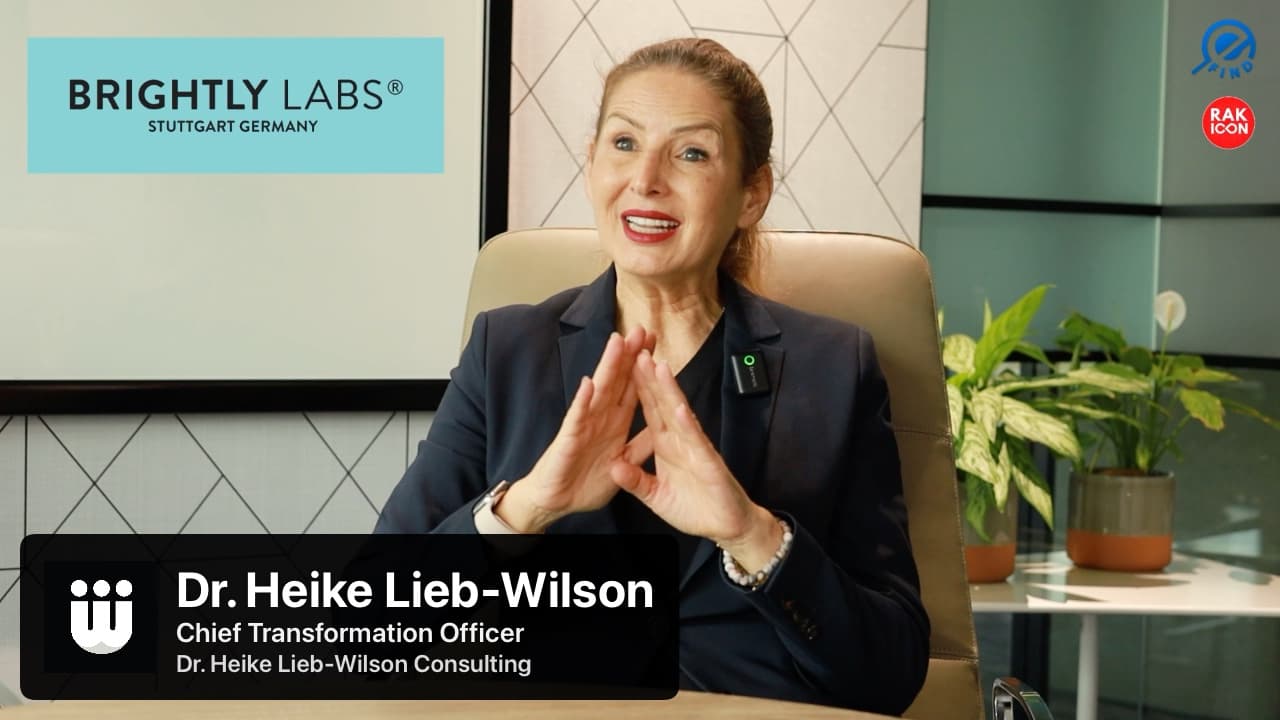
"Most businesses don't fail because of strategy. They fail in execution—misaligned teams, unclear ownership, decisions that take too long, capital tied up in the wrong places." This observation from Dr. Heike Lieb-Wilson, Chief Transformation Officer and one of the region's most experienced retail strategists, captures the central challenge facing RAK business leaders. Goal-setting without execution discipline is not planning. It is wishful thinking with a calendar attached.
CEO 1: Karim Daher — Founder & CEO, Prime Project Partners
The Construction Leader Who Built a Company to Solve a Problem He Witnessed
Karim Daher spent years managing production at Zein Italia Marble before founding Prime Project Partners, Ras Al Khaimah's dedicated owner's representation and project management firm. His goal-setting philosophy is shaped by the practical demands of construction, where projects have hard deadlines, fixed budgets, and zero tolerance for excuses.
"After years managing production, I witnessed countless owners struggle with unreliable contractors, budget overruns, and quality issues," Karim explained in his WHO is WHO in RAK interview. "Prime Project Partners exists to solve that problem. Every goal we set is measured against one question: does this protect the owner's interests?"
Karim's Goal-Setting Framework
Define the outcome in owner terms, not internal terms. Karim insists that every project goal be expressed from the owner's perspective: on-time delivery, within budget, to quality standards. Internal metrics—hours worked, reports generated, meetings held—are secondary. "An owner does not care how many site visits we conducted. They care whether their building was delivered as promised."
Set milestones that prevent drift. Construction projects are notorious for budget and schedule drift. Karim's response is a milestone system with financial consequences. Each milestone has defined deliverables, quality criteria, and budget checkpoints. Deviation triggers immediate review and corrective action, not at project completion when damage is irreversible.
Document everything. "Most construction disputes are not caused by malice. They are caused by unclear expectations, poor documentation, and absent oversight." Karim's goal achievement system relies on radical transparency: photographic progress reports, detailed cost tracking, and candid problem reporting. This documentation discipline enables accountability and prevents the gradual erosion of standards that destroys projects.
Hold weekly goal review meetings. Every Monday morning, Karim reviews active project goals with his team. What was achieved last week? What is planned this week? What risks have emerged? What decisions are blocked? This rhythm prevents goals from being set quarterly and forgotten monthly.
CEO 2: Berdia Qamarauli — Founder & CEO, Centigen AI
The Serial Entrepreneur Who Scales Through Pattern Recognition
Berdia Qamarauli is a serial founder with a proven track record in building and scaling startups, raising capital, and working closely with investors. As Founder and CEO of Centigen AI, he leads a company developing intelligent AI agents for business automation. His goal-setting approach reflects the pattern recognition that serial entrepreneurs develop across multiple ventures.
"I have a proven track record in building and scaling startups, raising capital and working closely with investors to drive business success," Berdia stated in his WHO is WHO in RAK interview. "What separates startups that scale from those that stagnate is not the ambition of their goals. It is the clarity of their milestones and the speed of their iteration cycles."
Berdia's Goal-Setting Framework
Set OKRs, not vague objectives. Berdia uses Objectives and Key Results (OKRs) with specific, measurable targets. "Objectives without key results are aspirations. Key results without measurement are fiction." For Centigen AI, a quarterly objective might be "Expand agent deployment to three new industry verticals," with key results including specific client acquisition numbers, platform uptime percentages, and customer satisfaction scores.
Iterate in two-week cycles. Startups face uncertainty that makes annual planning unreliable. Berdia breaks goals into two-week sprints with defined deliverables and retrospective reviews. "In two weeks, you can test an assumption, learn from the result, and adjust. In two months, you might have wasted eight weeks pursuing a goal that was never viable."
Prioritise revenue-adjacent goals. Not all goals are equally valuable. Berdia ranks goals by proximity to revenue generation. Product development that enables a paid feature outranks product development that merely improves aesthetics. Marketing that generates qualified leads outranks marketing that generates impressions. "Resource constraints force hard choices. Revenue proximity is the filter that makes those choices correctly."
Measure leading indicators, not just lagging indicators. Revenue is a lagging indicator—it tells you what happened in the past. Berdia tracks leading indicators: demo requests, trial activations, feature usage rates, support ticket resolution times. These predict future revenue and provide earlier warning when goals are off track.
CEO 3: Mike Hoff — Founder & CEO, MHC Consulting FZ LLC
The Profit Growth Specialist Who Diagnoses Before He Prescribes
Mike Hoff has worked with thousands of businesses globally through his MHC Business Coaching platform and Profit Acceleration Software™. His goal-setting methodology is diagnostic and prescriptive: identify the structural flaws first, then set goals that fix them.
"A recent survey showed that 33 percent of businesses are still not profitable following recent events," Mike noted in his WHO is WHO in RAK interview. "Most businesses don't fail because of bad ideas. They fail because of bad systems—broken processes, unclear accountability, and owners who are too busy working IN the business to work ON the business."
Mike's Goal-Setting Framework
Start with the profit equation, not the growth target. Before setting any goal, Mike analyses the business's profit equation: Revenue = Number of Customers x Average Transaction Value x Frequency of Purchase. Goals that do not map clearly to one of these three levers are distractions. "Growth for growth's sake is dangerous. Profitable growth is the only growth worth pursuing."
Identify the 20 percent that produces 80 percent. Mike's methodology centres on finding the small set of activities that generate disproportionate results. "I take the overwhelm away by focusing on the 20 percent of activities that give you 80 percent of your results." Goals should prioritise these high-impact activities and eliminate or delegate the rest.
Set 90-day goals, not annual goals. Annual goals are too distant to drive weekly behaviour. Mike recommends 90-day goal cycles with specific, measurable outcomes that feel urgent and achievable. "What if I jumped in the hole with you and helped you find your way out? I can get you out of the hole in 90 days with our Profit Acceleration System." The 90-day horizon creates focus without the paralysis that distant deadlines permit.
Build accountability systems, not just goals. Goals without accountability are wishes. Mike implements weekly check-ins, progress scorecards, and consequence structures that keep goals visible and urgent. "I don't sugarcoat anything. I'm straight to the point with the things you need to do and when you need to do them." This directness is not harshness; it is the clarity that achievement requires.
CEO 4: Sandra Louw — CEO, RAK International Corporate Centre
The Fiduciary Leader Who Plans in Decades
Sandra Louw oversees multi-billion dirham structured assets as CEO of RAK ICC, one of the UAE's most respected corporate registries. Her goal-setting horizon is measured not in quarters but in decades, reflecting the fiduciary responsibility she holds for family offices and international investors who plan across generations.
"Family offices do not choose jurisdictions randomly," Sandra observed in her WHO is WHO in RAK interview. "They choose jurisdictions where the regulatory infrastructure, the professional services ecosystem, and the political stability align over multi-decade time horizons. My goals must match that time horizon."
Sandra's Goal-Setting Framework
Align goals with mandate, not ambition. Sandra's goals are derived directly from her organisational mandate: service expansion, international partnership development, and positioning RAK ICC as the UAE's preeminent structuring destination. Personal ambition or market trends that do not serve this mandate are filtered out. "International business structuring is not about complexity for its own sake. It is about creating architectures that protect assets, enable succession, and satisfy regulators across multiple jurisdictions. Goals must serve that purpose."
Build multi-year strategic frameworks with annual operational plans. Sandra distinguishes between strategic goals (multi-year, directional, structural) and operational goals (annual, specific, measurable). The strategic framework provides stability and context. The operational plan provides flexibility and accountability. Both are necessary; neither alone is sufficient.
Measure reputational indicators alongside financial metrics. For a corporate registry, reputation is capital. Sandra tracks regulatory ratings, client satisfaction scores, partnership quality, and industry recognition alongside financial performance. "A quarter with strong financial results but declining regulatory confidence is not a success. It is a warning."
Invest in relationships as strategic assets. Sandra's goals explicitly include relationship-building with law firms, accounting practices, and fiduciary service providers globally. These relationships are not networking for its own sake; they are the distribution infrastructure that delivers RAK ICC's services to international clients. "Goals that ignore relationship investment are short-sighted."
CEO 5: Dr. Heike Lieb-Wilson — Chief Transformation Officer
The Strategist Who Turns Complexity into Clarity
With over four decades of global business experience and eleven years in the GCC, Dr. Heike Lieb-Wilson has transformed retail brands including Porsche Design, Tommy Hilfiger, Calvin Klein, and ESCADA. Her goal-setting approach reflects the operational discipline required to turn strategic vision into executable plans.
"Today, I work at C-level as a Chief Transformation Officer, partnering directly with founders and leadership teams to reposition businesses for scalable and sustainable growth," Dr. Lieb-Wilson explained in her WHO is WHO in RAK interview. "My focus is simple: turning complexity into clarity, strategy into execution, turning businesses into high-performing systems."
Dr. Lieb-Wilson's Goal-Setting Framework
Start with a ruthless diagnostic. Before setting any goal, Dr. Lieb-Wilson conducts a comprehensive diagnostic of the current operating reality. What is actually happening in the business? Where is money being made and lost? What processes work and what processes fail? What talent is present and what is missing? "Transformation is not about theory. It is about execution, discipline, and leadership. You cannot execute effectively if you do not understand the current reality."
Set goals that redesign operating models. Dr. Lieb-Wilson's goals are not merely numerical targets. They are structural changes to how the business operates: new governance frameworks, redesigned decision rights, restructured reporting relationships, and rebuilt processes. "Most businesses don't fail because of strategy. They fail in execution. Goals must address the execution system, not just the outcome."
Build governance that enables speed. Counterintuitively, Dr. Lieb-Wilson argues that well-designed governance accelerates rather than slows execution. Clear decision rights, defined escalation paths, and unambiguous accountability eliminate the ambiguity that paralyses action. "The businesses that execute fastest are not the ones with the least process. They are the ones with the clearest process."
Hold people accountable to results, not activity. Dr. Lieb-Wilson's goals include explicit accountability assignments: who owns what outcome, by when, with what resources. Activity metrics—hours worked, emails sent, meetings attended—are irrelevant. "What matters is whether the outcome was achieved. If it was not, we diagnose why and adjust. If it was, we celebrate and replicate."
Common Threads: Five Principles for Goal Achievement
Despite different sectors, personalities, and time horizons, these five RAK CEOs converge on several principles that any business owner can apply.
Principle 1: Clarity Beats Ambition
The most powerful goal is the one that is understood by everyone in the organisation. Each of these CEOs invests heavily in articulating goals simply and repeatedly. Karim Daher's owner-centric outcome language, Mike Hoff's profit equation, and Sandra Louw's mandate alignment all represent different forms of the same principle: if people do not understand the goal, they cannot achieve it.
Principle 2: Measurement Creates Accountability
Goals without measurement are indistinguishable from intentions. Berdia Qamarauli's OKRs, Mike Hoff's 90-day scorecards, and Karim Daher's milestone checkpoints all create the measurement infrastructure that makes accountability possible. The specific system matters less than the discipline of regular, honest measurement.
Principle 3: Shorter Cycles Beat Longer Plans
Annual goals are necessary for direction, but insufficient for execution. These CEOs all operate with shorter review cycles—weekly, bi-weekly, or quarterly—that create urgency and enable course correction. Dr. Lieb-Wilson's governance frameworks, Berdia's two-week sprints, and Mike's 90-day horizons all reflect this principle.
Principle 4: Elimination is as Important as Addition
Goal achievement requires saying no. Mike Hoff's 80/20 focus, Sandra Louw's mandate filtering, and Dr. Lieb-Wilson's ruthless diagnostic all involve eliminating distractions, low-value activities, and well-intentioned initiatives that fragment resources. The most successful RAK CEOs are distinguished not by what they pursue but by what they decline.
Principle 5: Accountability Requires Consequence
Goals without consequences for non-achievement are suggestions. These CEOs build consequence structures—financial, reputational, or procedural—that make goal achievement personally meaningful. This is not punitive; it is the recognition that human beings respond to incentives and that organisational goals must be wired into personal motivation.
A Practical Goal-Setting Framework for RAK Business Owners
Drawing together these five CEOs' approaches, here is a practical framework that any RAK business owner can implement.
Phase 1: Diagnostic (Week 1)
- Analyse your profit equation: where does revenue actually come from?
- Identify your 20 percent: what activities generate 80 percent of results?
- Audit current goals: are they clear, measurable, and aligned with mandate?
- Assess execution capacity: do you have the people, systems, and resources to achieve your stated goals?
Phase 2: Goal Design (Week 2)
- Set one to three primary goals for the next 90 days
- Define specific, measurable key results for each goal
- Assign single-point accountability for each key result
- Identify the 20 percent of activities that must be protected to achieve these goals
Phase 3: Execution Structure (Week 3)
- Establish weekly goal review meetings with defined agendas
- Create visible scorecards that track leading indicators
- Build consequence structures for both achievement and non-achievement
- Eliminate or delegate activities that do not serve the primary goals
Phase 4: Review and Adapt (Ongoing)
- Conduct weekly reviews against scorecards
- Hold monthly strategic reviews to assess whether goals remain relevant
- Celebrate achievements visibly and specifically
- Diagnose failures honestly and adjust approach without blame
The Courage to Confront Reality
Perhaps the most important quality these five CEOs share is not strategic brilliance or operational discipline. It is the courage to confront reality—to look at results honestly, to admit when goals are wrong, and to change course without ego or delay.
"This region holds unbelievable potential," Dr. Heike Lieb-Wilson reflected. "I've built here. I've struggled here. I've grown here. And now I help others do the same—with clarity, care, and confidence." That confidence is not arrogance. It is the earned certainty that comes from setting goals, executing against them, learning from failure, and repeating the cycle until success becomes predictable.
For RAK business owners, the path is clear. Set goals with clarity. Measure with discipline. Execute with accountability. Adapt with courage. The leaders profiled here have proven that this path works in Ras Al Khaimah's distinctive environment. The question is not whether it can be done. It is whether you will do it.
Watch the Full Interviews
The insights in this article are drawn from in-depth video interviews with each of these Ras Al Khaimah business leaders. To hear their complete perspectives on goal-setting, execution discipline, and building successful businesses in the UAE, watch their full interviews on WHO is WHO in RAK.
- Karim Daher on Construction Excellence and Owner Representation
- Berdia Qamarauli on AI Automation and Startup Scaling
- Mike Hoff on Profit Growth and Business Transformation
- Sandra Louw on International Wealth Structuring and Long-Term Planning
- Dr. Heike Lieb-Wilson on Retail Transformation and Execution Discipline